Ne Zha (Film)
Introduction
Ne Zha is a groundbreaking Chinese animated film that has become a cultural phenomenon since its release in 2019. Based on a mythical male figure from Chinese folklore, the film reinterprets the story of Ne Zha, a boy deity often depicted as a rebellious hero. The film's success has been unprecedented in China's animation history, capturing the hearts of audiences and critics alike. With its release, Ne Zha not only set box office records but also revitalized interest in traditional Chinese stories, showcasing the potential for such narratives to appeal to modern audiences.
Plot
The film follows the story of Ne Zha, who is born with unique powers but is destined by prophecy to bring destruction to the world. As an outcast hated and feared by his peers, Ne Zha struggles with the prejudice and social exclusion he faces. Determined to change his fate, he chooses to defy the expectations placed upon him and seeks to prove himself as a hero. The narrative explores themes of self-discovery, courage, and the fight against societal biases, ultimately conveying a message of empowerment and the importance of choosing one's path in life.
Characters
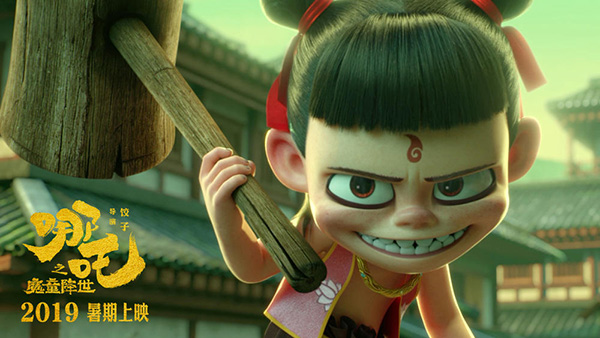
Ne Zha: The protagonist of the film, Ne Zha is depicted as a mischievous boy with a rebellious spirit. Born with powers that make him feared by others, he is determined to change the perception of him and prove his worth as a hero. His journey is one of self-discovery and defying societal expectations.
Aobing: The third son of the East Sea Dragon King, Aobing is initially positioned as Ne Zha's rival. However, his gentle demeanor and contrasting personality to Ne Zha make him a compelling character, contributing to the film's exploration of themes such as friendship and rivalry.
Taiyi Zhenren: Ne Zha's master, portrayed as a humorous character who provides guidance and mentorship to the young hero. His character adds a comedic element to the film while also representing the traditional wisdom imparted to Ne Zha.
Li Jing and Lady Yin: Ne Zha's parents, who play significant roles in his life. Li Jing is shown as a caring father willing to make sacrifices for his son, while Lady Yin is portrayed as a loving mother who balances her work with supporting Ne Zha.
Production
Development
The development of Ne Zha was a meticulous process that spanned several years. Directed by Yang Yu, also known as Jiaozi, the film underwent numerous revisions to perfect its script and character designs. The production team faced the challenge of reinventing Ne Zha's character to resonate with modern audiences while retaining elements of traditional folklore. This involved creating over 100 versions of Ne Zha's image before finalizing his distinct appearance, marked by crooked teeth and dark circles, which conveyed both his mischievous nature and underlying vulnerability.
Animation
Ne Zha is lauded for its stunning animation quality, which rivals that of major Hollywood studios. The film's production involved over 1,600 animators from 20 special effects studios, working tirelessly to bring the story to life. The animation showcases a blend of traditional and modern techniques, with a focus on creating immersive visual experiences. The film's breathtaking fight sequences and detailed settings, such as the Dragon King's dungeon, highlight the technological advancements and creativity of the animation team.
Music and Soundtrack
The music and soundtrack of Ne Zha play a crucial role in enhancing the film's emotional depth and cultural resonance. Composed to complement the film's narrative, the music blends traditional Chinese instruments with modern orchestral elements, creating a soundscape that reflects Ne Zha's journey. The soundtrack underscores key moments in the film, amplifying the drama and tension while also celebrating the hero's triumphs.
Release
The marketing strategy for Ne Zha was instrumental in its success, with a carefully crafted campaign that leveraged social media and word-of-mouth to build anticipation. The film's promotional efforts included interactive social media content and collaborations with popular influencers, which helped engage younger audiences. The marketing also emphasized the film's unique take on a beloved myth, appealing to both fans of traditional folklore and those seeking fresh cinematic experiences.
Box Office
Within days of hitting theaters, the film grossed over 1 billion yuan, and it continued to dominate the Chinese box office for weeks. It ultimately became the highest-grossing animated film in China's history, earning over 4.9 billion yuan. Its success extended beyond domestic markets, with a release in North America and other international territories, where it garnered positive reception despite cultural differences.
Reception
Critics and audiences alike praised Ne Zha for its innovative storytelling, compelling characters, and high-quality animation. On platforms like Douban, the film received one of the highest ratings in history, reflecting its widespread acclaim. Reviewers highlighted the film's ability to modernize a traditional tale while addressing contemporary themes, making it relatable to today's viewers. The film's success also sparked discussions on the potential of Chinese animation to compete on the global stage.
Accolades
Ne Zha received numerous accolades, both domestically and internationally. It was selected as China's official submission for the Best International Feature Film category at the Academy Awards, marking a significant milestone for Chinese animation. The film was also recognized at various film festivals and award ceremonies, celebrating its achievements in animation, storytelling, and cultural impact.
Cultural Impact
Ne Zha's cultural impact extends beyond its box office success. The film has reinvigorated interest in Chinese mythology and folklore, inspiring a new generation to explore traditional stories. Its portrayal of Ne Zha as a relatable and modern character has resonated with audiences, contributing to a broader conversation about identity, acceptance, and the power of self-determination. Additionally, the film's success has encouraged other filmmakers to explore China's rich cultural heritage in their works.








